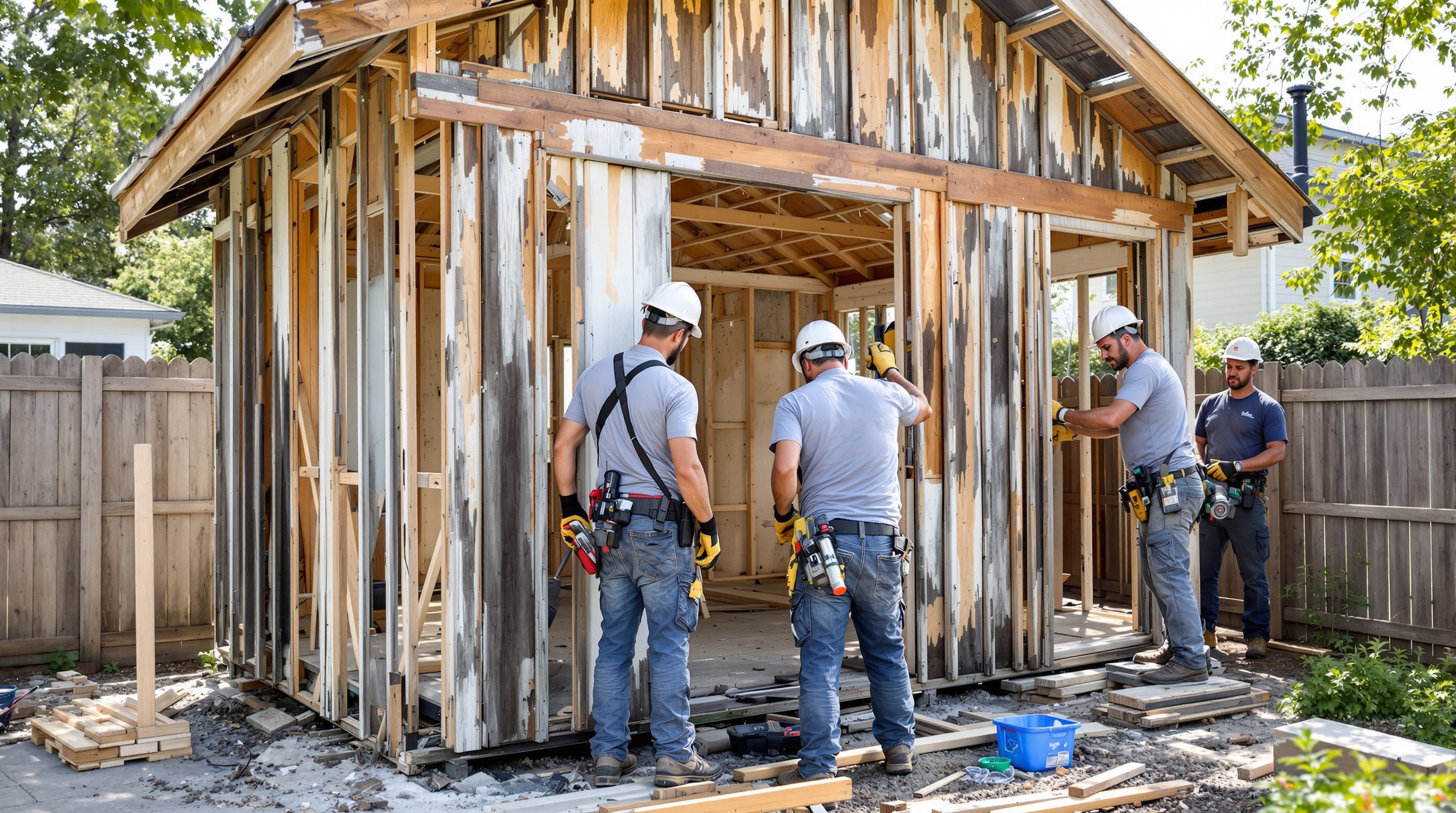
That old shed in your backyard has seen better days. Whether it's leaning dangerously, rotting from years of weather exposure, or simply taking up valuable space, removing it might seem like a straightforward DIY project. However, shed removal and demolition involves more complexity than most homeowners anticipate.
From structural safety concerns to proper disposal of materials, understanding what to expect during shed removal helps you make informed decisions about whether to tackle it yourself or hire professionals. This comprehensive guide walks you through the entire process, costs, and considerations.
Why Remove Your Old Shed?
Safety Hazards
Rotting wood, unstable structures, and pest infestations create dangerous conditions for your family.
Property Value
Dilapidated sheds decrease curb appeal and can negatively impact your home's market value.
Space Reclamation
Remove unused structures to create space for gardens, patios, or new outdoor features.
Replacement Plans
Clear the old to make way for a modern, functional storage solution that meets your needs.
The Professional Shed Removal Process
Understanding each step helps you know what to expect when professionals handle your shed removal. Here's the typical timeline and process:
Initial Assessment
Professionals inspect the shed's size, construction, condition, and location. They identify potential hazards like asbestos, lead paint, or structural instability. Access routes and equipment needs are evaluated.
Permit Verification
Depending on your location and shed size, demolition permits may be required. Professional services handle permit applications and ensure compliance with local regulations.
Site Preparation
The area around the shed is cleared of obstacles. Utilities are checked and disconnected if necessary. Protective measures are taken to safeguard surrounding landscaping and structures.
Systematic Demolition
The shed is carefully dismantled starting from the roof, then walls, and finally the foundation. Materials are sorted for recycling, donation, or proper disposal. Safety protocols are maintained throughout.
Foundation Removal
Concrete slabs, piers, or footings are removed if requested. The ground is leveled and prepared for future use, whether that's landscaping, new construction, or simply grass restoration.
Complete Cleanup
All debris is removed from your property. The area is swept clean, and any disturbed landscaping is restored to its original condition. You're left with a clean, usable space.
Shed Removal Cost Breakdown
Shed removal costs vary based on size, materials, location, and complexity. Here's what influences pricing:
- 8x10 ft or smaller
- Wood or metal construction
- Easy access
- No foundation removal
- 10x12 to 12x16 ft
- Standard construction
- Moderate access
- Basic foundation removal
- 16x20 ft or larger
- Complex construction
- Difficult access
- Full foundation removal
Additional Cost Factors:
DIY vs Professional Shed Removal
DIY Removal
Pros:
- Lower upfront cost (if you have tools)
- Work on your own schedule
- Salvage materials for reuse
Cons:
- Risk of injury from heavy materials and tools
- Time-consuming (often 2-4 full days)
- Need to rent equipment and dumpster
- Responsible for proper disposal
- Potential property damage without experience
Professional Service
Pros:
- Fast completion (usually same day)
- Fully insured and licensed
- Proper equipment and expertise
- Complete cleanup and disposal included
- No risk to you or your property
- Handles permits and regulations
Cons:
- Higher upfront cost
- Need to schedule appointment
How to Prepare for Shed Removal
Whether you're hiring professionals or doing it yourself, proper preparation ensures a smooth removal process:
Empty the Shed Completely
Remove all contents including tools, equipment, shelving, and personal items. Check for hidden items in corners and overhead spaces.
Disconnect Utilities
If your shed has electricity, water, or gas, have these professionally disconnected before removal begins.
Clear Access Paths
Remove obstacles between the shed and the street. Trim overhanging branches and move vehicles, furniture, or decorations.
Check for Permits
Contact your local building department to determine if demolition permits are required for your shed size and location.
Notify Neighbors
Give adjacent neighbors a heads-up about the removal date, especially if equipment will be near property lines.
Protect Landscaping
Mark sprinkler heads, underground utilities, and valuable plants you want to preserve during the removal process.
Document the Condition
Take photos of the shed and surrounding area before removal for insurance purposes and to track the transformation.
Eco-Friendly Shed Disposal
Responsible shed removal includes proper material disposal and recycling. Professional services like JUNK Riddance prioritize environmental sustainability:
Wood Recycling
Untreated lumber is recycled into mulch, compost, or biomass fuel. Treated wood is disposed of according to environmental regulations.
Metal Salvage
Roofing materials, fasteners, and metal siding are sorted and sent to scrap metal recyclers for reprocessing.
Concrete Recycling
Foundation materials are crushed and reused as aggregate for new construction projects or road base.
Donation Opportunities
Salvageable materials like doors, windows, and hardware are donated to Habitat for Humanity ReStores when possible.
Ready to Remove Your Old Shed?
JUNK Riddance handles shed removal and demolition projects of all sizes across Wisconsin. Fast, safe, and eco-friendly service with complete cleanup included.
Related Articles
Garage Cleanout Tips: From Chaos to Organized Storage
Transform your cluttered garage into functional space with expert organizing tips.
Hot Tub Removal: DIY vs Professional Service
Compare the real costs and risks of DIY versus professional hot tub disposal.
The Ultimate Guide to Cleanouts
Comprehensive guide covering all types of cleanouts and how to choose the right service.